«Είναι
ένα πασίγνωστο μέσο των οδηγών και των εξερευνητών. Όταν συνειδητοποιούν πως έχασαν το δρόμο ή πως πλανιούνται άσκοπα στο δάσος, έχουν ως κανόνα να μην προσπαθούν ποτέ να ξαναβρούν τον προσανατολισμό τους με βάση το ένστικτό τους. Πάντοτε σε τέτοιες περιπτώσεις ξαναγυρίζουν σιγά σιγά και προσεκτικά προς τα πίσω για να ξαναβρούν το σημείο από το οποίο ξεκίνησαν ή το σημείο από το οποίο άρχισαν να χάνονται.» (Άλφρεντ Χίτσκοκ)
«Η ταυτότητά της γράφει Ρέα Φραντζή, ελαφρά ντυμένη, έχει μερικά λεφτά, κάθεται με την πλάτη ακουμπισμένη στον τοίχο του μικρού μαγέρικου, στην πλατεία του Άνω Κάμπου, απέναντι από την άσπρη εκκλησία, χιλιάδες χρόνια μετά την Αποκάλυψη, εννιακόσια χρόνια από τότε που ο μοναχός Χριστόδουλος έχτισε ένα μοναστήρι εκεί που ήταν ο ναός της Αρτέμιδος, τρεις μέρες από τότε που χώρισε με τον άντρα της…»
Η Ρέα Φραντζή, τριανταδύο χρονών, μεγαλωμένη τη δεκαετία του ’60, έχοντας διανύσει κατά τη δεκαετία του ’70 και ’80 όλες τις διαδρομές που επέβαλε ο περίγυρός της, η γοητεία του συρμού και η αναγκαιότητα να συμβαδίζει με την εποχή της, αναχωρεί για την Πάτμο σε μια προσπάθεια αυτογνωσίας.
«Είναι η ιστορία μιας φυγής. Στη διάρκεια όλου του βιβλίου περιγράφεται ένα αδιέξοδο που έχει νιώσει η Ρέα κάνοντας έναν απολογισμό, τι έγινε τα τελευταία είκοσι χρόνια…»
Οι εικόνες της τουριστικής Πάτμου του 1988 εναλλάσσονται με αυτές της Κυψέλης των παιδικών κι εφηβικών χρόνων της Φραντζή. Από τη μία η Ελλάδα του ’60 και από την άλλη η Ελλάδα του ’80. Πόσα άλλαξαν μέσα σ’ αυτά τα χρόνια; Η Ρέα είναι μια τυπική εκπρόσωπος αυτής της γενιάς. Μιας γενιάς που «συμμετείχε σε μια καταστροφή χωρίς να ‘χει πάρει την ευθύνη της. Αντίθετα μάλιστα, τη συνεχίζει…»
«Τριανταδύο χρονών, ελαφρά ντυμένη, χιλιάδες χιλιόμετρα μακριά από το κέντρο του κόσμου. Κάποτε το κέντρο του κόσμου βρισκόταν παντού, ακόμα και η πλατεία Κυψέλης ήταν το κέντρο του κόσμου, γνωστού και αγνώστου, ορατού και αοράτου, φανερού και κρυφού. Ζούσαν εκεί η Βάνα, η Έρση, η Μίνα, οι οικογένειές τους. Πίστευαν ότι πρώτα έγινε η πλατεία Κυψέλης και αργότερα σχηματίσθηκε γύρω της ο υπόλοιπος κόσμος».
Από την Κυψέλη της εφηβείας και της αθωότητας, στα βόρεια προάστια της αποξένωσης και της κατανάλωσης. Η Ρέα ανατρέχει στο παρελθόν για να ανακαλύψει την αρχή αυτής μετάλλαξης, να βρει τι έφταιξε… Στην Πάτμο της Αποκάλυψης, στην Πάτμο των κρουαζιερόπλοιων και των ξανθών τουριστών, θ’ ανέβει σκαλί-σκαλί την κλίμακα προς την αυτεπίγνωση.
Κυψέλη, Αίγινα, ένα χωριό στην Ναυπακτία, Γενεύη, Βενετία και Πάτμος, είναι οι τόποι που σημάδεψαν την πορεία της Ρέας. Το καθετί που είχε αξία γι’ αυτήν σιγά σιγά χανόταν. Έχασε τη συντροφικότητα, έχασε την οικειότητα, έχασε το κέντρο του κόσμου… Το τραγικό είναι ότι χρειάστηκε να χάσει όλα αυτά ανεπιστρεπτί, για να συνειδητοποιήσει την αξία που είχαν. Η αναμόχλευση του παρελθόντος είναι ουσιαστικά η ελεγεία αυτής της απώλειας.
«Πέντε χιλιάδες βόλτες στο κέντρο της πόλης της δίδαξαν τον τρόπο ν’ αποφεύγεις τους άλλους, να γλιστράς σα σκιά, να πεθαίνεις στο πλάι τους, να κάνεις ότι δεν τους ξέρεις, ότι ποτέ δεν τους γνώρισες…»
Η μαντάμ Φραντζή είναι ο Χρήστος Βακαλόπουλος και το αδιέξοδό της είναι το αδιέξοδο της γενιάς του! Μια γενιά που σαν τη Ρέα ηττήθηκε. Ένιωσε τα τείχη να την κλείνουν και μόνον η θάλασσα της απέμεινε. Όσο όμως φωτεινή και απέραντη κι αν είναι, το τέλος δεν μπορεί παρά να είναι ζοφερό…
Το έργο του Βακαλόπουλου είναι ένα από τα πιο φιλόδοξα ελληνικά μυθιστορήματα που έχω διαβάσει. Στόχος του δεν είναι μόνο να δείξει, μέσω της Ρέας, την πορεία της γενιάς του αλλά και την πορεία ολόκληρης της χώρας. Μιας Ελλάδας που αιώνες τώρα παραδέρνει μεταξύ Ανατολής και Δύσης. Από το 1204 έως το 1988 η ιστορία είναι πάντα δυναμικά παρούσα, ακόμα κι όταν το μόνο έχει μείνει απ’ αυτήν είναι μερικά ονόματα και κάποια ερείπια.
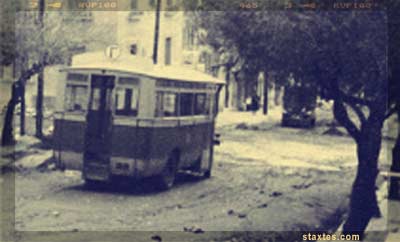
Ο ρυθμός της αφήγησης έχει μια ιδιόρρυθμη μουσικότητα καθώς κάποια μοτίβα αλλά και θέματα επανέρχονται δίνοντας νέες διαστάσεις σ’ αυτό που έχει ήδη ειπωθεί. Ο ίδιος ο συγγραφέας ονόμασε τη μέθοδό του ως «βότσαλο στη λίμνη»: «σαν να πετάς ένα βότσαλο και να φτιάχνονται κύκλοι, και σχεδόν σ’ όλο το βιβλίο είναι αυτή το βότσαλο και τα κεφάλαια οι κύκλοι». Υπάρχουν κεφάλαια αριστουργηματικά, όπως ο Κάμπος, το Λεωφορείο, το Απόγευμα, ο Πάγκος και το Παραμύθι και υπάρχουν κι άλλα που χαρακτηρίζονται από μια γραφή δημοσιογραφικού τύπου, σα να γράφτηκαν με άλλη αφορμή και να στριμώχτηκαν εδώ ως εμβόλιμα. Από τη μία η ευφυής οργάνωση του μυθιστορήματος με πρότυπο το ασκητικό κείμενο της Κλίμακος του Ιωάννη και από την άλλη η χαλαρή αλλά πάντοτε πάλλουσα γραφή του. Είναι μάλλον υπερβολικό να αναμένει κανείς να βρει στο βιβλίο, αυτό που αποκαλούμε: «le mot juste». Ο Χρήστος Βακαλόπουλος (1956-1993), σκηνοθέτης, σεναριογράφος, πεζογράφος, παραγωγός ραδιοφωνικών εκπομπών, κριτικός κινηματογράφου, μουσικής και τηλεόρασης, κατόρθωσε να γράψει ένα εξαιρετικό μυθιστόρημα δίνοντας μέσα σε λίγες σελίδες το στίγμα μιας ολόκληρης γενιάς. «Μιας γενιάς αιχμαλώτων των ιδεών και αιχμαλώτων ενός μοντέλου ζωής που δεν ήρθε ποτέ έτσι όπως το είχαν φανταστεί, αλλά η αιχμαλωσία παρέμεινε ως διαδικασία. Δεν μπορούν δηλαδή αυτοί οι άνθρωποι να ξεφύγουν από κείνο που είχαν σκεφτεί για το μέλλον όταν ήταν μικροί…».
Η Ρέα Φραντζή, νοσούσα, κάμνουσα κι αιχμάλωτος, το καλοκαίρι του ’88 στην Πάτμο, συνειδητοποιεί ότι το μόνο σημείο φυγής είναι η γραμμή του ορίζοντος και κολυμπάει αργά προς αυτήν…
«Δεν είμαστε πια όλοι μαζί: ίσως επειδή, όπως λέει ο Χρήστος, χάσαμε το κέντρο και βυθιστήκαμε ένας-ένας στον υποκειμενικό του χρόνο, περιμένοντας το μέλλον για να μαζέψουμε τα κομμάτια… Δεν είμαστε όμως ολότελα μόνοι: γυρίζοντας πίσω μέσα μας, ανακαλύπτουμε ένας-ένας πως είμαστε όλοι εκεί, πως κουβαλάμε ακόμα ο ένας τον άλλον… Δεν έχουμε ακόμη απάντηση στο ερώτημα «πώς πέρασαν τα χρόνια;» κι ίσως είναι καλύτερα έτσι (δεν ωφελεί να φτάνει κανείς πριν της ώρας του, δεν πρέπει να τρομάζουμε τα φαντάσματα). Μέσα μας ξέρουμε μόνο -με τη χάρη μιας πάντα διφορούμενης γνώσης- πως τα παιδιά το ‘σκασαν, οι γυναίκες στέρεψαν, τα τραγούδια σώθηκαν «κι όλοι μαζί είμαστε πια ένας-ένας».
© Ναυτίλος
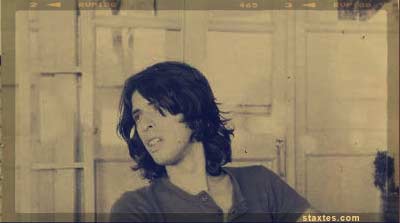
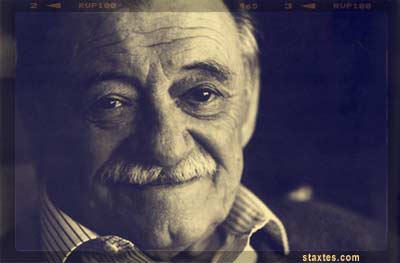
Στη φωτογραφία, ο Βακαλόπουλος σε νεαρή ηλικία.
*
Σημειώσεις: Τα αποσπάσματα με κόκκινους χαρακτήρες προέρχονται από το μυθιστόρημα. Αυτά με μπλε είναι από συνεντεύξεις του Βακαλόπουλου και βρίσκονται στο βιβλίο: «Η ονειρική υφή της πραγματικότητας» (εκδ. Εστία), όπου έχουν συγκεντρωθεί κείμενα και συνεντεύξεις του με την επιμέλεια του Κώστα Λιβιεράτου. Από το ίδιο βιβλίο και το τελευταίο απόσπασμα με πράσινους χαρακτήρες. Πρόκειται για την τελευταία υποσημείωση στο επίμετρο του Λιβιεράτου. Εκτός από τα λογοτεχνικά του έργα, στη βιβλιοθήκη μου υπάρχει και η συλλογή άρθρων και δοκιμίων: «Από το χάος στο χαρτί», εκδ. Εστία σε επιμέλεια Ν.Δ.Τριανταφυλλόπουλου. Στο ομώνυμο δοκίμιο υπάρχει, ως μότο, και το απόσπασμα του Χίτσκοκ, που παραθέτω στην αρχή της ανάρτησης. Δυστυχώς, μια άλλη συλλογή με κινηματογραφικές κριτικές του («Δεύτερη προβολή», εκδ. Αλεξάνδρεια 1990), παραμένει εξαντλημένη. Στην αρχή της «Γραμμής του ορίζοντος» υπάρχει η φωτογραφία μιας παρέας του Βακαλόπουλου με τη λεζάντα: «Υπέρ νοσούντων, καμνόντων, αιχμαλώτων της δεκαετίας του ’70». Επίσης, το μότο στο μυθιστόρημα είναι του Ιωάννη της Κλίμακος (525-605): «Δεξάμενος φλόγα, τρέχε, ου γαρ γινώσκεις πότε σβέννυται και εν σκοτία σε καταλείψει». Η Κλίμακα είναι ένα ασκητικό κείμενο σε τριάντα συν ένα λόγους: βαθμίδες που ανεβάζουν τον πιστό από τα χαμηλότερα στα υψηλότερα, όπως και η Ρέα, στα 31 κεφάλαια, φαίνεται να πηγαίνει «σκαλί-σκαλί προς την αυτεπίγνωση» (Δ. Κοσμόπουλος). Η φράση «le mot juste» («η σωστή λέξη») αποδίδεται στον Φλωμπέρ και χαρακτήριζε το λογοτεχνικό του πιστεύω. (17/20)
[πηγή]
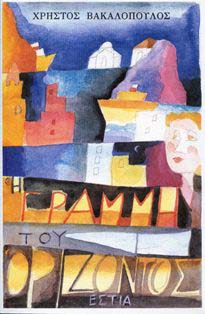
Χρήστος Βακαλόπουλος Η γραμμή του ορίζοντος Εκδόσεις Εστία. To εξώφυλλο του βιβλίου είναι σχεδιασμένο από τον Αλέξη Κυριτσόπουλο
 στάχτες
Πρέπει να έχετε συνδεθεί για να σχολιάσετε.