Anthony Arnott, poetry

 
Call off the search

Daylight dies
into dusk
into night
much more quickly
when it’s
needed.

Poor souls have similarly
fading
hope and batteries to light
up the night, fighting the
ever-growing fear
that
their angel will forever
be that age.
Rage, vacant panic boils,
cracks into
one solitary cry,
anguished prayer
disguised as
a wail.

Torch illuminates blades
upon blades, as
she, on her knees,
curses the days she
took
for granted and,
to herself, her palms,
the stars and beyond,
she swears
that she will never
rest again.

 
Rolling the dice

I read my horoscope today.
And, as ever, took it with a salt-pinch.

Read about the moons and
the end of the month, hoping it would come true,

but forgot all about
it once I’d

turned the page.

 
The town that might have been

On the train,
I rolled through
the town that might have been.

The sky was calm
and hurt,
as it only reminded me of opportunities missed.

The sun,
a low bulb,
was bearable to look at
and I had to tell myself that,
if I’d chosen this town,
it wouldn’t always be this lovely.

I always thought of telling
the town that might have been
how close it actually was to being,
but never thought it would do any good
to either of us.

In its station,
I almost expect the town to be there,
on the platform,
waiting for me,
ready to pull me from the train
and into its arms.
But, it never is.

The town that might have been exists
in a parallel universe.
I only pass through.
I can never stay.

*
©Anthony Arnott
photo by © Stratos Fountoulis, «Coffee varieties» Edmonton, Canada, 2012

Bio
Anthony Arnott lives in Jarrow, South Tyneside, and works as an English teacher. In April 2013, his collection, The Genius who drank all the milk, was released. This was the follow-up to his August 2011 debut, Behind Barcodes, both of which were published by erbacce-press. For two years, he was a Poetry Editor for The Black Market Review.
He has also had work published in Peggy’s Blue Skylight, First Edition Magazine, Question Mark, The Journal, Streetcake Magazine, Why Vandalism? Journal, Broken Wine, Mud Hutter Express, The Delinquent, Turbulence Magazine, Fade Poetry, Camel Saloon, The Tower Journal, Message in a Bottle Magazine, Bareback, Bad Robot, Asinine Poetry, The Artistic Muse, Black Magnolias Literary Journal, Astronaut Magazine, Ink, Sweat & Tears, Inclement and Century 121, as well as in anthologies such as The Strand Book of International Poets 2010, Liquid Gold and Sculpted Anthology.
A keen reader, Anthony has read in support of Jerome Rothenberg and has had fifty-word stories published in 50 to 1 and Postcard Shorts.

Iulia Gherghei, “for a lifetime under a street lamp” –poetry

 
The infinite mirrors of Ocean

Why do we call this planet Earth
when it is the vast waters that gave him the colour
no matter where you look a tide
will answer the moon call
a breeze will caress the seagull wing
a blade of sand will sting a thirsty eye

Where else but at the shore we will meet
the horizon line uniting sky and ocean vastness
a kiss in the infinite mirrors
a taste of no boundaries
a fear that the next tide
will slap and crumble all your certainties

When if not in the middle of storm
God becomes a dry shirt
a farewell tear
a letter never to be mailed
a list of sons abandoned at the shore

Again calm waters, little joyful waves
enormous blue wearing a sky
breeze to comb my curly hair
Ocean, the moon lover, you,
hung my star in your tide!

*

Sighisoara- medieval dream

I don’t seem to remember
how many times we’ve been to the medieval city
I don’t seem to remember
how many guitars we listen soaked in alcohol stench
how many victims we’ve made with our burst in laughter
walking on the summery, medieval streets
climbing the stairs to nowhere, to the uphill tombs
sleeping on grass under a sky
showing no interest to our debauchery
beer, more beer, more laughter
long nights with strangers met a year ago
suddenly friends for a lifetime under a street lamp
we talk till the dawn itself had fallen asleep
till I don’t seem to remember
how many times the clock from the tower stroke
the midnight over my chevaliers’ story…
Do not dare…

*

Always

I will have more rights than you
the air must land on my lungs first
the land must caress my feet with its dust….
my dust, to be fully understood… first
you….you with your height equally to the worm’s
you’ll stick your destiny to my boots’ sole
and let me tell you
I will totally enjoy crushing entire nations into my jaws
Do not dare ask me why
Do not dare cry
Do not dare shade this land
Eat your tear cause you lost
You’ve just become my compost
Always
stay put when I cross the street,
The river that once flooded your grains
it is now tamed to ruin your roots 
your land no longer exist
therefore
Do not dare ask me why
Do not dare cry
Do not dare shade this land
Eat your tear cause you lost
You’ve just become my compost.

*
©Iulia Gherghei
Photo by Stratos Fountoulis, 2013


Iulia Gherghei, an amateur poet from Romania, graduated from University of Bucharest, Technology of information. She published her poems mostly on facebook and in the anthologies edited by Brian Wrixon, Barry Mowles, Mutiu Olawuyi! In 2012 she published her first book » Prisoners of Cinema Paradiso» at blurb.com, edited by Brian Wrixon.

Joan McNerney, “Tracing darkness with vagrant fingertips” –poetry

 
Tomatoes

In the corner of Best Foods
sit gleaming towers of tomatoes.

Organically grown in fine
“gated communities” far from
toxic sprays, cheap fertilizers.

High above common rabble
produce, many of these tomatoes
will go on to Harvard or Yale.

So what if their price tag is high!
Jammed packed full of antioxidants
they will not linger on the vine.

Feast your eyes upon these healthy
specimens. Note rosy glowing
skins without poisonous additives.

Gourmets check out organic labels
for vitamin rich food harvested
au natural without preservatives.

These are red-blooded American
tomatoes with no “identity crisis”
about being fruits or vegetables.

Go ahead get fresh, pick one up
and devour a few juicy nibbles.

*

 
The Search

We are the lost who have
climbed hillsides…gathering
innumerable and unnamed
stumbling over sharp rocks
searching for our long shadows.

Tracing darkness with
vagrant fingertips
tasting the disdain of dust
we are long shadows
moaning with open mouths.

Eating bitter food grown
on the wrong side of this moon
our hearts caged in fear
fearing we have been cast off
fearing we have no destination.

Sands burning our feet
whipping our unnamed faces
we are long shadows crossing
this dessert longing for
an end to our thirst.

We are losing our shadows
entering empty caves
now listening for echoes
now finding wells of memories
innumerable and unnamed.

*

Lost Dream

I am driving up a hill
without name on an
unnumbered highway.

This road transforms into
a snake winding around
coiled on hair pin turns.

At bottom of the incline
lies a dark village strangely
hushed with secrets.

How black it is. How difficult
to find that dream street
which I must discover.

My fingers are tingling
cool, smoke combs the
air, static fills night.

Exactly what I will explore
is unsure. Where I will find it
unknown. All is in question.

I continue to haunt gloomy
streets in this dream town
crossing dim intersections.

Everything has become a maze
where one line leads to another
dead ends become beginnings.

Deciding to abandon my search,
I return for my automobile…
nowhere to be found in shadows.

Finally I look up at the moons’
silver eye…my lips forming
prayers to a disinterested god.

*

Night

Slides under door jambs
pouring through windows
painting my room black.

This evening was spent
watching old movies.
Song and dance actors
looping through gay,
improbable plots.

All my plates are put away,
cups hanging on hooks.
The towel is still moist.

I blow out cinnamon candles
wafting the air with spice.
Listening now to heat
sputtering and dogs
barking at winds.

Winter pummels skeletal
trees as the moon’s big
yellow eye haunts shadows.

*
©Joan McNerney
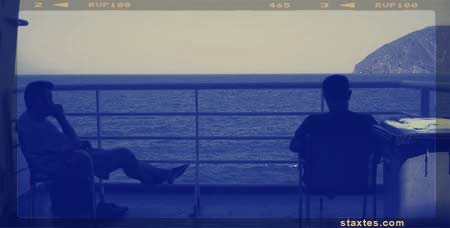
Photo by Stratos Fountoulis, «On the boat to Heraklion,Crete, August, 2013»

Constantine Mountrakis, poetry


The Complete History of Everything

If lives of people
should be complete sentences
then my own is a fragment
adjective-happy,
short on verbs

through a pinprick
in a sheet of paper
I witness
what I believe to be
the narratives of others

what I send through
like the golden plaque
of the pioneer
into irreconcilable spaces
can never be
important enough
to intercept

***

Walk-in Apartment

She rests her head
among her saints
early in the evenings
and tries to sleep
despite the hum
of other people’s laundry

Three feet beneath the living,
three feet above the dead
she rests the fatigued resilience
of the God-tried
in a room
illuminated but poorly
by the faint
day-mimicking light
of her tired face

*

©Constantine Mountrakis
‘Michaux sur son Vélocipède’ – Photograph by Disdéri, 1867


Bio
Constantine Mountrakis is an anthropologist and writer from New York City. He currently lives in Athens, Greece, where he is pursuing a doctorate. Aside from hanging out in a laboratory full of dead people, he also writes. His work has appeared in Red Fez, Punchnel’s, Blue Hour Magazine, and Feile-Festa, among others.

Edward Wells II, entropy

“Out there it is bloody, fucking chaos, mate.” he spun on his left leg toward the younger, twirling the spatula in his left hand. The apron settled in front of him and he began again shaking the spatula at the younger gently and then turning back toward the stove. “In here, you think about it, and the whole fucking thing seems simple enough. Yeah?” He pressed down into the skillet and something seemed to shriek, as he resumed too quickly to allow a response, “Simple enough and straight about too. That’s how things are too. If you can find that in here you know that is how they are. It is so elegant that you’ll know- when you find it, that all it takes is to express it and like the lights mate, you’ve got it.” He moved his arms around a bit in a restrained motion in front of him and then turned toward the table that the younger male was sitting at. He walked to the table and placed two plates on it. “It’s so simple; yet out there, it’s bloody, fucking chaos.” He sat down and then looked directly at the younger. “Now, eat up, mate.”

It was especially when the younger male sat on the hard floor of the living room, staring at blocks with sunlight streaks cutting through smokey, dusty air to strike whatever was in its path, that the younger went, in his mind, to something nice and simple. Mostly he sat there quietly with his legs crossed and his hands palms up, one holding the other, and both resting in the center of his legs. The sounds of his neighbors were a varying ambiance that was internalized and unrecognized.
The younger could smell the older male and hear the older’s body any time he was there. The older spoke loudly sometimes, and he liked when the younger looked at him while he talked. According to everything the older imparted, all the things that the older said would be of benefit, but it didn’t make sense because the younger had already found the simplest and easiest way. He was polite, and some people gave him what he wanted.
“Get up. We’ve got to get the trash out of here, now.” The older man was wearing a plain white t-shirt that had a number of holes widening around the neck line. In his pocket rested the soft package of cigarettes that had the visual appearance of a decoration. The younger rose, walked to the kitchen and opened the cabinet beneath the sink. The large green plastic trash can had been with the older man longer than the younger had. The rim was worn, revealing a number of holes that were beginning to widen. The result was that small pieces of the lip would crack off when lifting the can by the lip. The older man would lament and attempt to reinforce in the younger the importance of not breaking off any more of the lip. The younger would listen. “I realize that that can is getting old, but every day that we make it last from now on, is another day that we save the cost of replacing it. It’s like overtime. These points are important. Do you understand that?”
The younger would nod his head in the positive. The younger would inform the older when another piece of the lip would break off, because it was important. What was actually real in his mind was the can could be used long after it had no lip and that a broken lip was no reason to stop being polite & getting what he wanted.
A wrapper spun at the base of the hallway’s wall. A piece of string swung at the top of the stairwell. He drug the toe of his shoe pointing it at the spinning wrapper, then across a seam with a thump. Another thump against the angled concrete above the stairs. Another fainter down the hall. The light grew brighter and brighter. He reached the bottom step. The last on the left. The door was the end. Light streamed and spread around the darkened concrete wall. Light from above and up the steps on either side of the wall ahead at the end of building. The light came up into the hall and just past the last door on the left where he now stood.
He touched the handle and then knocked. The tiny dent at the upper left was always a comfortable resting spot for the ring finger of his left hand. The knob turned with his hand still on it and the man pulled the door open. The boy stepped inside and rubbed his left eye with the meat of his hand.
“Got the trash out quick didn’tcha?” The man pushed the door closed behind the boy and then walked into the living area and sat on the couch. “You know. When you don’t take out the trash, I have to walk out to the left, Down the short steps and all way ’round. The banging stairs you bound up, I can’t take anymore.” The man sat there with the television for a moment while the boy sat down on the hard floor. “Chinga. Never get like me. Ya hear. And would’cha look at that on the screen.?” The boy lifted his head in the direction of the screen. The two watched as a news story was read and text scrolled across the bottom of the screen.
“They’re screaming overthrow him. I’m wondering where’s the bloody dictator supposed to dictate the people that want to be dictated when we give the country to the people that want to be free.” The younger watched as some diminishing flames and embers lit part of the otherwise darkening room in a brief image. “But out there, it’ll be a lot of bloody fucking chaos before its over, mate.”

*

©Edward Wells II
photo: 19th cent. photo snapshot by Staxtes.com

Bio
Edward Wells II is a writer soon to graduate from schooling, again. He is plotting a plan to reenter schooling soon after graduation–or in lieu of that, to hopefully flee the country. Individual pieces of his short fiction have appeared in Mad Swirl, This Great Society is Going Smash, The Bicycle Review, and other publications.
Edward is currently engaged in a protracted dialectic on setting and plot with the Editor of the Pedestrian Press, publisher of Edward’s collection “CO” (2013). The dialectic was inspired by another Editor’s rejection of Edward’s fiction, ‘What wicked tricks are these?’
You can contact him through his artist facebook page, (EdwardWellsII).

Daniel Bowman, After the Funeral

Elaine Morton caught a glimpse of herself in the dining room mirror as she carefully carried the teas towards the living room, two in each hand. She did not immediately recognise herself with short hair; she had not worn it this short since she was twelve years old. For a moment it was like looking at some grotesque distortion, like a child who has suddenly aged fifty years overnight. She looked tired. She felt tired.

   The funeral had finished some hours ago. George, Elaine’s ex-husband, had taken the younger children for the night so that she could look after her elderly father in peace. It had been a long, difficult day. Robert, her eldest, was also there. He had only come home for the funeral and would be catching a train back to University early tomorrow morning. He stood up and attempted to remove two of the teas from around his mother’s spindly fingers.
   “You should have given me a shout.”
   “It’s alright I managed fine.”
   Robert placed the piping mugs on the plastic table.
   “Who’s that other one for?”
   Elaine looked puzzled at the two remaining teas she carried. She remembered consciously choosing four mugs from the cupboard. She managed a weak laugh.
   “Do you know I’m not sure, spare one.”
   They sipped their teas in silence. Norman, her father, sat back in the armchair, oblivious to the conversation. It really was a horrible armchair. The theme of the living room had always been ‘child-proof’: Paintings on tatty paper blu-tacked to the walls, patches of damp spreading from the corners of the ceiling, turning the cream paint a tea-stained yellow; the little blue picnic table where the kids used to eat their lunches, shapeless brown sofas to camouflage the Ribena stains, and a scattering of neglected toys and board game pieces. The chair had been a spur-of-the-moment purchase after her husband had taken the matching brown one, a sort of burgundy with creeping black floral patterns winding up the arms. It had looked very striking outside the second-hand-shop, amongst the tatty leather recliners and ominously discoloured futons. But here, surrounded by childish plastic furniture and facing an oversized television, it looked ridiculous, desperate almost.
   “Grandad?”
   Robert leant forwards, holding his grandfather’s traditional Manx mug at arm’s length.
   “Do you want your tea Grandad?”
   Norman didn’t reply. His frail eyelids quivered a little, folded down over frightened eyes. He’s not asleep, Elaine thought, he just doesn’t want to be here. But he is, nonetheless. She gently nudged her father on the shoulder until he opened his eyes.
   “Dad, Robert’s got your tea.”
   Norman squinted; even this action seemed to require a great effort.
   “Robert’s got your tea.”
   Slowly, slowly her father returned to the room.
   “Who?”
   “Robert.”
   “Robert?”
   “Yes, Dad. You know Robert.”
   She smiled apologetically at her son, but it didn’t offend him anymore. It had been easier for him, only seeing his grandfather during the holidays. He hadn’t had to watch him suffer and struggle and gradually forget how to live independently.
   Norman stared at Robert through cloudy blue eyes. They weren’t vacant, they hadn’t given up. That was what kept Elaine going. There was a desire to remember, still a desire to understand. But there was no recognition.
   “Thanks, lad” he said quietly, accepting the tea with two shaking hands. He took a minute sip before holding it out before him. Like a baby, thought Elaine, but scolded herself, helping her father replace the mug on the plastic table. A baby was easier to look after. It had sometimes been unpleasant, but she had really loved every second of raising her four children. Being woken up at all hours, changing nappies, nursing colds and the overall frustration at their incapacity to understand had all felt so right, so perfectly natural and easy. She hoped her children never had to look after her in such a way; there was no pleasure in that task.
   They sat in silence, the three of them. All at such different points of life. Was it any wonder they didn’t have anything to talk about? thought Elaine, glancing over at her son. Nineteen years old, she couldn’t believe it. When had they become so – distant? Being fifteen when his youngest brother was born, he just seemed to crawl into his attic room one day and quietly grow up. There he was, staring silently at the worn curtains, hanging limply from the few remaining hooks. Who has the time to replace curtain hooks?
   Was he happy? He never seemed unhappy. She’d heard him talk fondly about his friends, although he’d never brought them over for dinner. Was that still something people did at nineteen? She couldn’t remember. There was no reason to come to this house anyway, it was designed for children. But where were her children now? Every alternate weekend they would leave, leaving her alone in this playhouse. It fell into a state of suspended animation as soon as the kids left. Robert would be gone tomorrow as well.
   “Are you happy Robert?”
   She hadn’t really meant to ask. It wasn’t the kind of question to throw at your son on the day of his grandmother’s funeral, but there it hung. Robert thought for a moment, evidently trying to assess where this was going.
   “Do you mean right this second, or just generally?”
   “Just generally, with your own life.”
   Elaine thought he looked a little frightened. It was true she’d never spoken to her son like this before – plainly. When was the last time the two of them had had a meaningful conversation? It wasn’t as if they didn’t get on as mother and son, but it occurred to Elaine that their conversations could all be put down to a sense of duty. Her duty as mother to ask about his day, but not to pry, and his duty to respond pleasantly, and pretend he was interested in hearing about her boss. She doubted she could name any of his current friends, and he probably didn’t know what her job was.
   “Yes. I’d say I was happy. Every year seems to be a bit better than the one before.”
   There was a far-off quality in his expression as he spoke these words.
   “What about you, Mum? How are you doing?”
   She hadn’t expected him to return the question. Thinking about it, it would have seemed quite heartless of him not to, she just couldn’t see how her life could be of any interest to someone who could give an answer like the one Robert had just given her. It probably couldn’t be.
   “I don’t know” Elaine sighed, unsure how much she was about to burden her son with.
   “I just find myself wondering sometimes…” Was this fair? Robert was perched uncomfortably on the arm of the sofa, studying the scum inside his tea cup. Elaine looked at the little white clock on the mantelpiece, chipped from where a bouncy ball had knocked it off years ago. It was after midnight, in seven hours he’d be up and heading to the station. He probably couldn’t wait to get out of this house, back to real life.
    “What Mum?”
   Elaine stared at the little clock, then at her tired father.
   “What happens now?”
   Her tone must have betrayed something, because now Robert moved to her side and put his arm around her narrow shoulders.
   “I guess we just get on with it.”
*
©Daniel Bowman
photo 19th cent. anonymous.
Bio
Daniel is 21 years old and currently studying English Literature and Creative Writing at Northumbria University. He is originally from Sheffield and his favourite writers incluide Katherine Mansfield and James Joyce.
Howie Good, «The wind is out of focus» -poetic prose

MUST BE GENETIC
Everything’s online – guns and victims and suspects. Click a link. The turmoil is irresistible. Must be genetic. Language itself is a kind of treachery. Why perhaps a horse’s ears quiver. I have been meaning to ask, What’s it like to be the last fire engine in hell? Busy, probably. The son of man raises a warning finger before anyone can comment. I’m wise enough not to say what I think, but not wise enough not to think it.
GONE TO MEXICO
He vanished over the border. It’s been a hundred years and still no trace. I’m waiting for you outside the Starbucks in Buzzards Bay. I could be waiting for him to stroll up, an English-Spanish dictionary under his arm. A woman at one of the sidewalk tables is talking on her cell about cutting everyone’s hours. She’s twenty-something and almost pretty. I watch the afternoon heat rise in waves from the blacktop. “It is what it is,” the woman says. She glances at me and then away – not ashamed, just uninterested. Every day is a heart hooked up to a monitor, another cat shot with an arrow.
AMBIENT NOISE
The wind is out of focus. Soon you and everyone else related to me will begin to suffer the effects. The wind screams something about invisibility, spyware, a garden of beheaded flowers. It screams all night. In the morning, I sit at the kitchen table, unable to concentrate on what I’m reading. I listen in on the inane conversation of the birds at the feeder. There are tremors and a drooling sky. Juror No. 3 doesn’t seem to like me. I call the emergency number. I’m the emergency.
DON’T DIE
You’re whichever tree, the beech tree or the silver birch, sheds its leaves first. Blood that should only flow out parts of your heart flows back in. There are no secrets allowed, and no do-overs either, a line of buildings in the distance like so many tall knives. If thoughts made a noise, the noise my thoughts made would be moderate to severe, the flap-flap-flap of winged skulls hunting insects in the dark.
OBSCURE SIGNS OF PROGRESS
A man watches from somewhere nearby. The existence of angels would constitute a violation of U.S. airspace. You had been hoping for a quiet night tonight and, in the morning, caves of brightness. The man shields his eyes. You’re either a victim or a suspect. There’s always a choice. Repeat after me, Love is death turned inside out.

*
©Howie Good
photo: André Kertész, «Long Island» 1936

Bio
Howie Good, a journalism professor at SUNY New Paltz, is the author of the forthcoming poetry collection The Middle of Nowhere (Olivia Eden Publishing) and the forthcoming poetry chapbooks The Complete Absence of Twilight (Mad Hat Press), Echo’s Bones and Danger Falling Debris (Red Bird Chapbooks), and An Armed Man Lurks in Ambush (unbound CONTENT). He co-edits White Knuckle Press with Dale Wisely. goodh51@gmail.com

Robin Adnan, Why am I here?

My existence is a pause. A yellow bleep between the tightened red and some breathing green. When the daylight blinks away and the night turns dead and quiet, I brace myself for the distant thunders rumbling in my chest. Black, fossil-like fish splash out of the water, then dive deep into my dark fairyland. I sit in the middle of a vast, exploded field beneath the sun. Sweat and shadow become a muddy puddle inside me. When I stand up and reach for a door, I end up opening something else. Reality becomes a red cactus. I embrace it. A small, black child dances around me, laughing away – the scorched earth hisses under his feet. I watch his body melting down like wax. I close my eyes. Over the horizon, eons away, where dreams bloom into white flowers, I know I will find a great ocean smashing against towering cliffs, and an abandoned lighthouse haunting a long shadow on the rising mist.
There, I will find her waiting for me. I will climb into her warm, bellowing womb and sprout into an evergreen tree.

*
©Robin Adnan
Photo 2008-2013 ~Dark-Existence 

Bio
Robin Adnan, 33, from Bangladesh, became a refugee and after 10 years of working in Europe, he now lives in Canada. He is a Law Graduate.